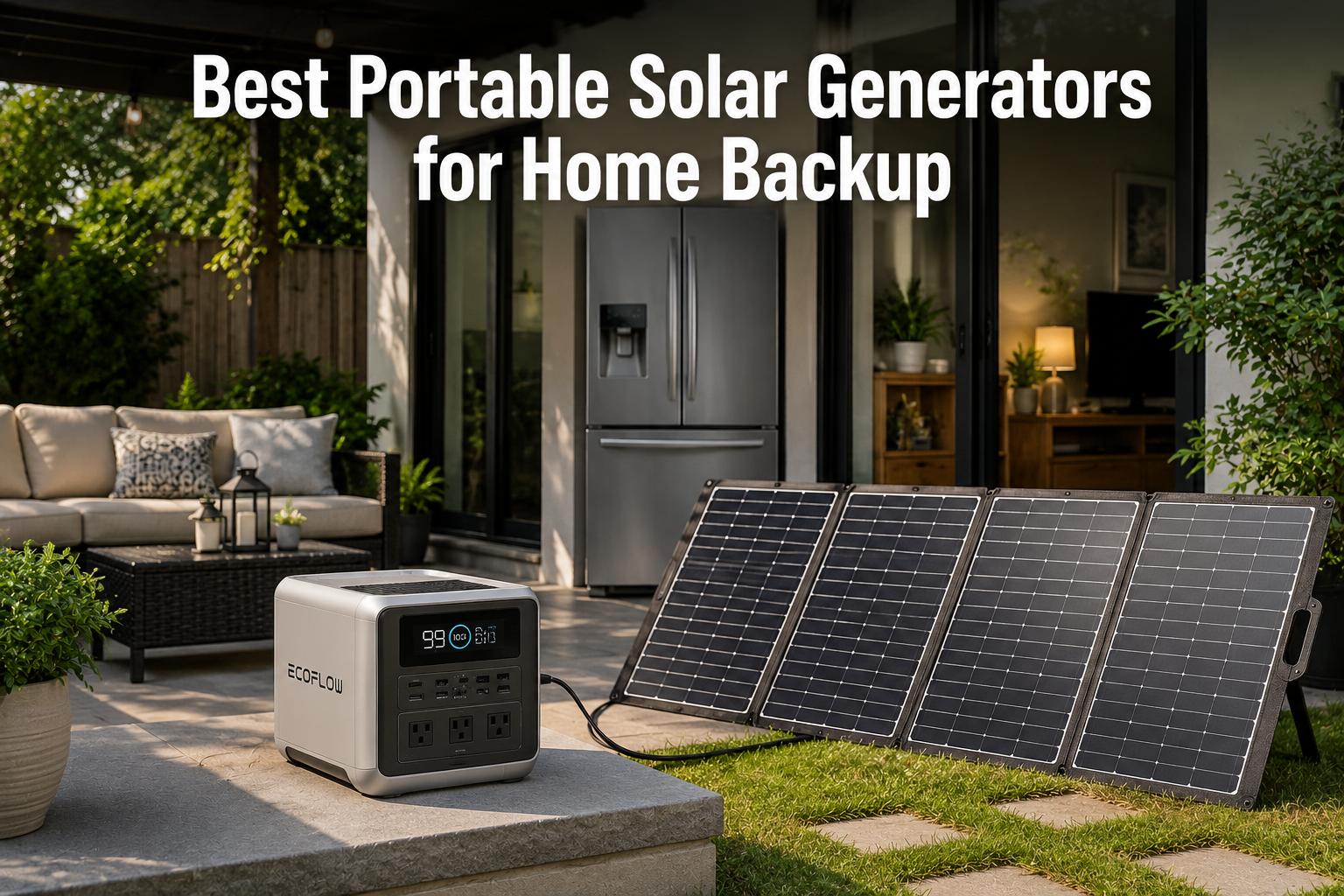
Power outages are more than an inconvenience—they disrupt refrigerators, medical devices, routers, lights, and essential appliances. Traditional gas generators require fuel storage, produce noise and fumes, and need regular maintenance. Portable solar generators (also called portable power stations with solar charging capability) offer a cleaner, quieter alternative that recharges from the sun, wall outlets, or car ports.
In 2025 and 2026 testing and reviews, modern units with LiFePO4 batteries deliver thousands of charge cycles, high continuous output, and expandability that can cover days of essential home loads. Capacity, AC output, solar input speed, and ease of use determine real-world performance far more than brand hype.
This guide focuses on models suited for home backup: powering a fridge, lights, communications, medical equipment, and select appliances during outages lasting from hours to several days. We’ll cover the key features that matter, current top recommendations based on recent expert and lab evaluations, a clear comparison, practical tips, and buying guidance.
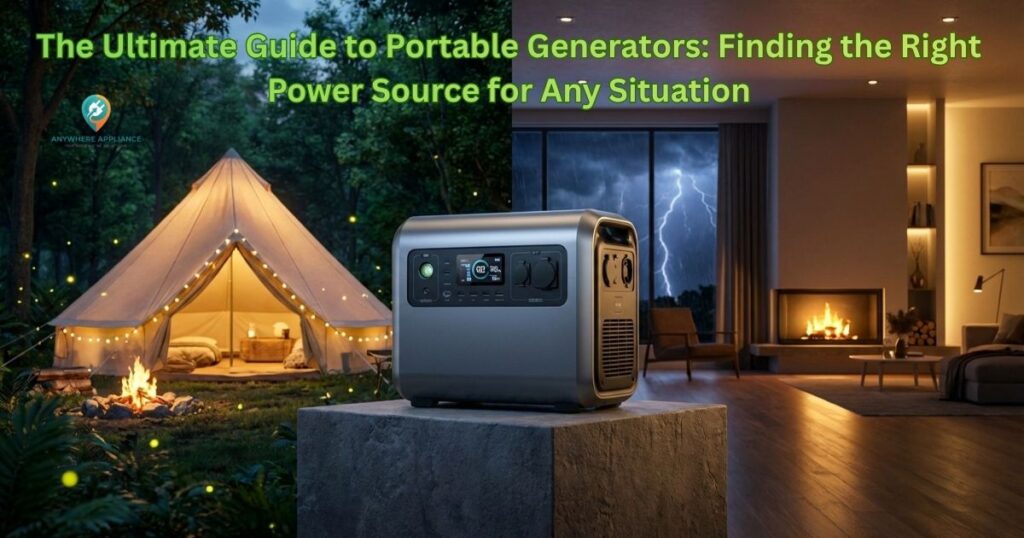
For more home backup and emergency power guides, read our reviews on the best portable home generators to survive power outages and our ultimate guide to portable generators.
Key Features to Look for in a Portable Solar Generator for Home Backup
- Battery capacity (Wh): This is the total energy stored. For basic essentials (fridge, lights, phones, router, CPAP), 1,000–2,000Wh often covers 12–24 hours. For longer outages or higher loads (window AC, more appliances), aim for 2,000–4,000Wh or expandable systems. Usable capacity is typically 80–90% of the rated figure.
- Continuous and surge AC output: Continuous wattage must exceed the running load of your devices. Fridges often need 100–200W running but 600–1,200W+ to start. Look for 1,800–3,600W continuous with higher surge ratings. Some premium models support 120/240V split-phase for heavier home loads.
- Solar input and recharge speed: Higher maximum solar input (800–2,600W) allows faster daytime recovery. Pairing with compatible portable panels (200–400W each) can fully recharge many units in a few hours of good sun. Fast AC wall charging (under 2 hours to 80%) is also valuable for grid-available periods.
- Battery chemistry and lifespan: LiFePO4 (lithium iron phosphate) is the current standard. It offers 3,000–6,000+ cycles to 80% capacity, better thermal stability, and longer overall life than older lithium-ion chemistries.
- Ports, expandability, and smart features: Multiple AC outlets, USB-C (100W+), USB-A, and 12V ports increase versatility. Expandable battery modules let you grow capacity over time. App monitoring, UPS/EPS mode (near-instant switchover for sensitive electronics), and home panel integration (for automatic transfer) add significant value for backup use.
- Portability and build: Units in the 40–100+ lb range are still “portable” with handles or wheels. Weight becomes less critical for stationary home backup but matters if you also want outdoor or RV flexibility.
- Safety and warranty: Look for multiple protection systems (overcharge, temperature, short-circuit) and warranties of 5 years or more, common on quality 2026 models.
Top Portable Solar Generators for Home Backup (2025–2026)
Recent evaluations from independent testers and review sites consistently highlight these models for reliability, performance, and real-world home use.
Best Overall for Most Homes: EcoFlow DELTA Pro / DELTA Pro 3
The EcoFlow DELTA Pro series stands out for home backup with roughly 3,600–4,096Wh capacity, 3,600–4,000W continuous output (higher surge and X-Boost options), and strong expandability (up to 25kWh or more with extra batteries). It supports high solar input and pairs with EcoFlow’s Smart Home Panel for near-automatic switchover when the grid fails. Testers note it can run a fridge, lights, phones, and a small TV for well over a day, with excellent fast AC and solar charging. It is heavier (around 99 lbs) but remains movable. Ideal for households wanting serious capacity and future expansion.
Best High-Output Portable: Jackery Explorer 2000 Plus / Solar Generator 2000 Plus
This model delivers about 2,042Wh expandable to around 12kWh, with a strong 3,000W continuous output (6,000W surge). It handles high-draw appliances well and recharges reasonably quickly via solar or AC. Reviewers praise its balance of power, expandability, and relative portability for the capacity class. It is frequently recommended for both home essentials and dual RV/home use. A solid choice when you need higher continuous wattage in a still-movable package.
Best Value: Bluetti AC200L / AC200MAX
Around 2,048Wh with solid 2,200–2,400W output and strong solar input (up to 900–1,200W), these models deliver excellent capacity per dollar. They support expansion in many configurations and offer reliable LiFePO4 performance. Recent rankings frequently list the AC200L as a top value pick for covering most outages while allowing a full solar recharge in a good day of sun. Slightly less peak output than the Jackery 2000 Plus in some comparisons, but strong overall for the price.
Strong Contender for Value and Features: Anker SOLIX F2000
Approximately 2,048Wh with around 2,200–2,400W output, the F2000 is often cited as a value champion in the mid-size class. Some versions include wheels for easier movement, solid app control, and good charging speeds. It balances capacity, price, and usability well for typical family essentials backup. Higher-capacity Anker options (such as the F3800) exist for those needing more power and 120/240V support.
Best Expandable/Modular Option: Bluetti AC300 + B300 (or similar stackable systems)
Starting around 3,072Wh and scalable significantly higher, these modular systems offer flexibility. High solar input and robust output make them suitable for growing backup needs. They trade some pure portability for long-term scalability.
Comparison Table of Top Models
| Model | Capacity (approx.) | Continuous Output | Max Solar Input | Expandable | Best For | Approx. Price Range |
|---|---|---|---|---|---|---|
| EcoFlow DELTA Pro / Pro 3 | 3,600–4,096Wh | 3,600–4,000W | 1,600–2,600W | Yes (high) | Serious home backup | $1,600–$2,800 |
| Jackery Explorer 2000 Plus | 2,042Wh | 3,000W | ~1,400W | Yes (to ~12kWh) | High-draw appliances | $900–$1,700 |
| Bluetti AC200L / AC200MAX | 2,048Wh | 2,200–2,400W | 900–1,200W | Yes | Value & solar recharge | $800–$1,400 |
| Anker SOLIX F2000 | 2,048Wh | 2,200–2,400W | ~1,000W | Limited/Yes | Balanced mid-size value | $1,500–$2,000 |
| Bluetti AC300 + B300 | 3,072Wh+ | 3,000W | High | Highly | Modular scalability | $2,500–$3,500+ |
Specs and prices vary by exact configuration, sales, and region; always verify current details. Performance draws from 2025–2026 reviews and testing.
Practical Tips for Using a Portable Solar Generator for Home Backup
- Calculate your needs first: List essential devices and their running/startup watts. Multiply by expected hours of use. Add a 20–30% buffer. Online load calculators from manufacturers help.
- Prioritize critical loads: Keep the fridge, medical equipment, communications, and minimal lighting on the unit. Avoid running space heaters or large ACs unless capacity and output allow.
- Optimize solar charging: Place panels in full sun, angled correctly, and keep them clean. Multiple panels in parallel or series (per manufacturer guidelines) maximize input. Charge during peak sun hours.
- Use UPS/EPS mode: Enable it for sensitive electronics so the unit switches over almost instantly during outages.
- Maintain the battery: Store at moderate temperatures and partial charge if not used for long periods. LiFePO4 is forgiving but performs best between roughly 32–104°F for charging.
- Safety first: Never operate indoors without proper ventilation if using any fuel-based hybrid. Keep units dry and follow all manufacturer electrical guidelines. Consider a transfer switch or professional advice for permanent home integration.
- Test regularly: Run a full simulated outage once or twice a year so you know exactly what the system can support.
Buying Advice
Match capacity and output to your longest expected outage and critical loads rather than buying the biggest unit available. Most households do well starting in the 2,000Wh class and expanding later if needed. Factor in the cost of solar panels—many kits bundle them, but standalone panels add flexibility.
Prioritize LiFePO4 chemistry and strong warranties (5 years is common on quality units). Read recent user reviews for notes on real-world runtime, app reliability, and customer support. Check local codes if planning permanent transfer-switch installation.
Budget $800–$1,500 for capable mid-size systems; $2,000+ opens higher capacity and better expandability. Watch for seasonal sales, as prices fluctuate.
Final Recommendations
For most homeowners seeking reliable backup in 2026, the EcoFlow DELTA Pro / DELTA Pro 3 is the strongest overall choice thanks to its high capacity, robust output, fast charging, and home integration options. If you want maximum continuous wattage in a more portable expandable package, choose the Jackery Explorer 2000 Plus. Value-focused buyers will find excellent performance in the Bluetti AC200L or Anker SOLIX F2000.
Any of these systems, paired with adequate solar panels and proper load management, can keep essential home systems running quietly and cleanly through outages. Start by calculating your actual needs, then select the model that best matches capacity, output, and budget. Reliable backup power has never been more accessible.