Boondocking or staying at campsites without reliable hookups is one of the joys of RVing—until the batteries run low and the air conditioner, microwave, or fridge needs power. A good portable generator keeps the comforts of home available while respecting campground quiet hours and neighboring campers.
Inverter generators dominate the RV category in 2025–2026 reviews because they produce clean power safe for sensitive electronics, run quieter than conventional models, and offer better fuel efficiency. Recent testing from Popular Mechanics, Bob Vila, and RV-focused sites consistently highlights models that balance wattage for air conditioning, runtime, noise levels under 60 dBA, and practical features like dual-fuel capability and RV-ready outlets.
This guide covers the features that matter most for RV use, top current recommendations with real-world reasons, a clear comparison, practical tips, and buying advice so you can choose confidently.
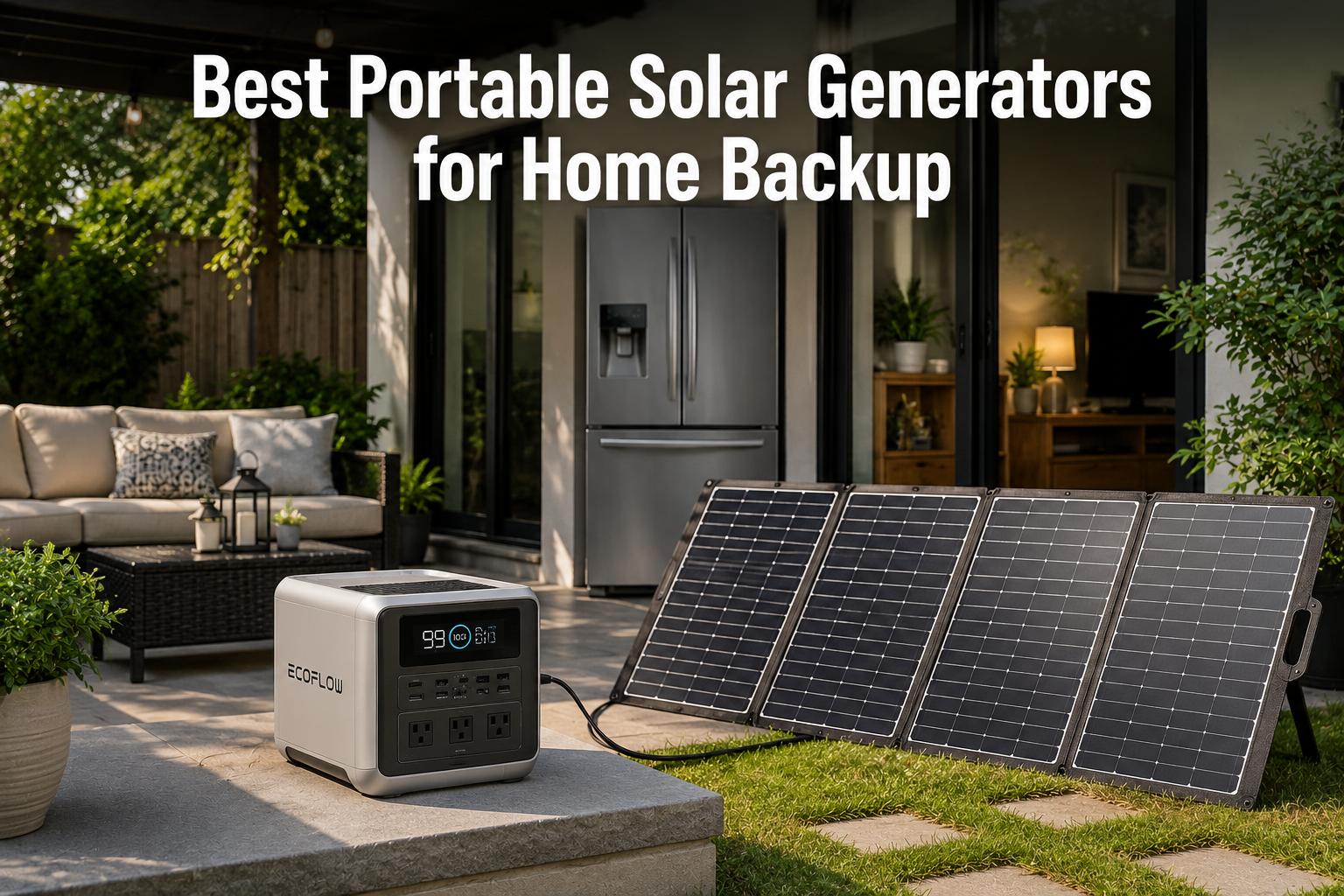
If you also need silent battery storage or emergency home power, check out our companion guides to the best portable solar generators for home backup and top portable generators for power outages.
Key Features to Look for in a Portable Generator for RV Camping
- Wattage (running and surge/peak): Most RVs need enough power to start and run a rooftop air conditioner (often 1,500–3,500+ starting watts depending on size and efficiency) plus other loads. Aim for at least 2,000–3,500 running watts for smaller rigs or partial AC use; 3,500–4,500+ running watts for fuller capability. Parallel kits can combine two smaller units.
- Noise level: Campgrounds often enforce quiet hours. Look for inverter models rated 48–60 dBA at 25% load or typical operating distance. Anything under 60 dBA is generally neighbor-friendly.
- Fuel type and runtime: Gasoline is common and widely available. Dual-fuel (gas + propane) models offer flexibility and longer storage life for propane. Runtime of 8–18 hours at 25–50% load reduces refueling trips. Larger tanks help for overnight or full-day use.
- Outlets and RV readiness: A TT-30 (30-amp RV) outlet is highly convenient for direct connection to your RV’s shore power cord. Multiple 120V outlets, USB ports, and 12V DC are useful extras. Parallel capability expands options later.
- Portability and starting: Weight under 50–60 lbs is ideal for easy lifting; wheeled models help with heavier units. Electric or remote start is a big convenience, especially in cold weather or at night. Recoil start remains reliable on premium models.
- Clean power and safety: Inverter technology keeps total harmonic distortion (THD) low (usually under 3%), protecting electronics. CO sensors that shut down the unit if carbon monoxide builds up are increasingly standard and valuable. Spark arrestors are required in many wildfire-prone areas.
- Parallel capability and expandability: Many modern inverters can be linked for more power without buying a single heavy unit.
Top Portable Generators for RV Camping (2025–2026)
Best Overall Quiet & Reliable: Honda EU2200i
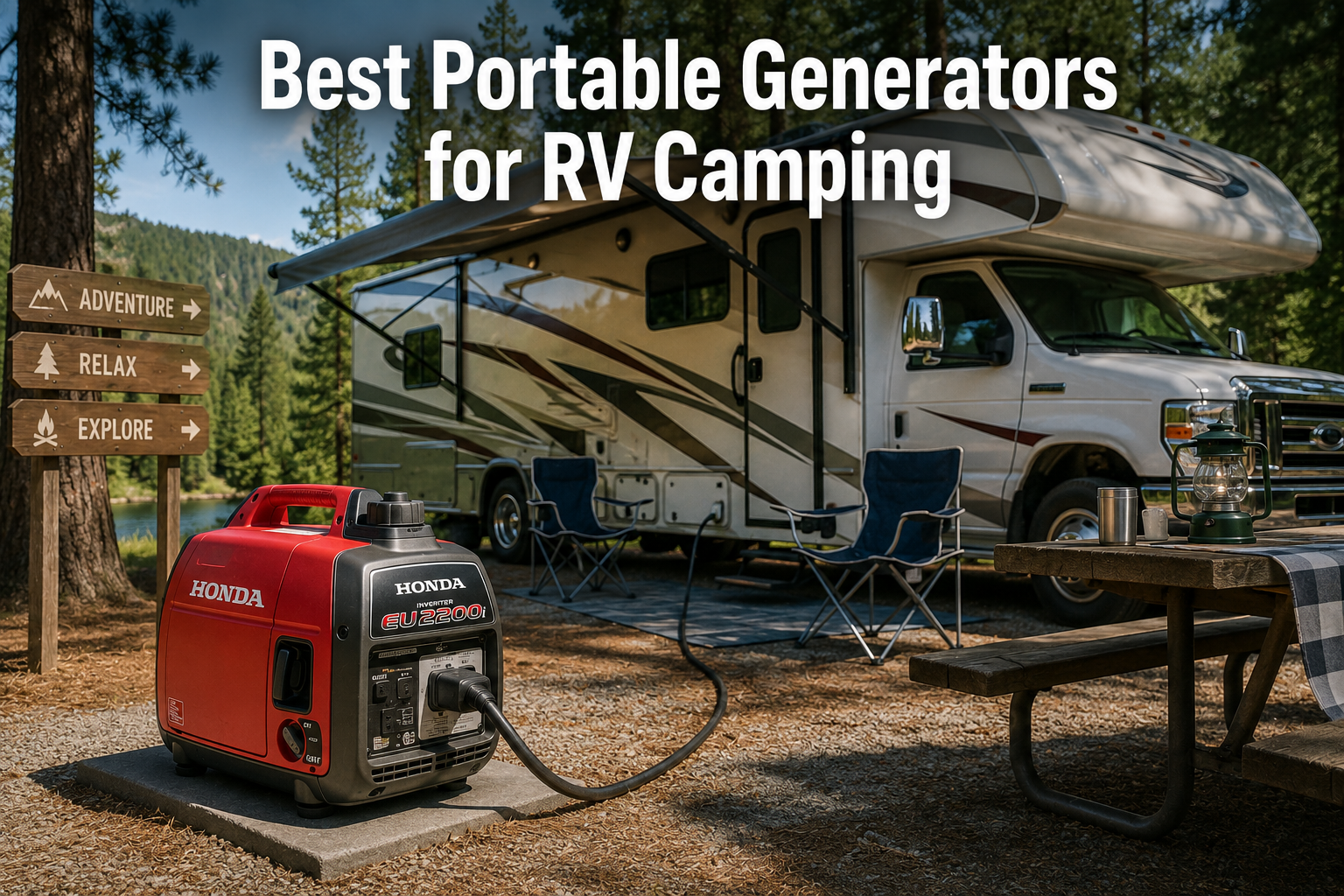
The Honda EU2200i remains the gold standard for RV and camping use. It delivers 1,800 running watts and 2,200 peak watts from a reliable Honda GXR120 engine, with noise levels as low as 48–57 dBA. Runtime reaches about 8.1 hours at 25% load on its 0.95-gallon tank. Weighing around 47 lbs, it is easy to move and store. Clean inverter power, excellent fuel efficiency, and legendary durability make it ideal for full-timers and anyone prioritizing quiet, dependable operation. It may need parallel operation or careful load management for larger AC units on hot days, but for most mid-size RVs and essential loads it excels.
Best for Full RV Power Including AC: Champion Power Equipment 4,500-Watt Dual-Fuel Inverter
Champion models in the 4,000–4,500-watt class frequently earn “best for RV camping” nods. Expect roughly 3,500 running / 4,500 peak watts (gas), dual-fuel flexibility, an RV-ready 30-amp outlet, and runtimes up to 14 hours on gas or longer on propane. Remote or electric start, relatively quiet operation for the power level (around 61 dBA or better on inverter versions), and parallel capability make these practical for running air conditioning and multiple appliances. They are heavier (often 90–100+ lbs) but wheeled designs help. Excellent balance of power and features for most travel trailers and motorhomes.
Best Quiet Higher-Output Option: Westinghouse iGen4500 or iGen5000 Series
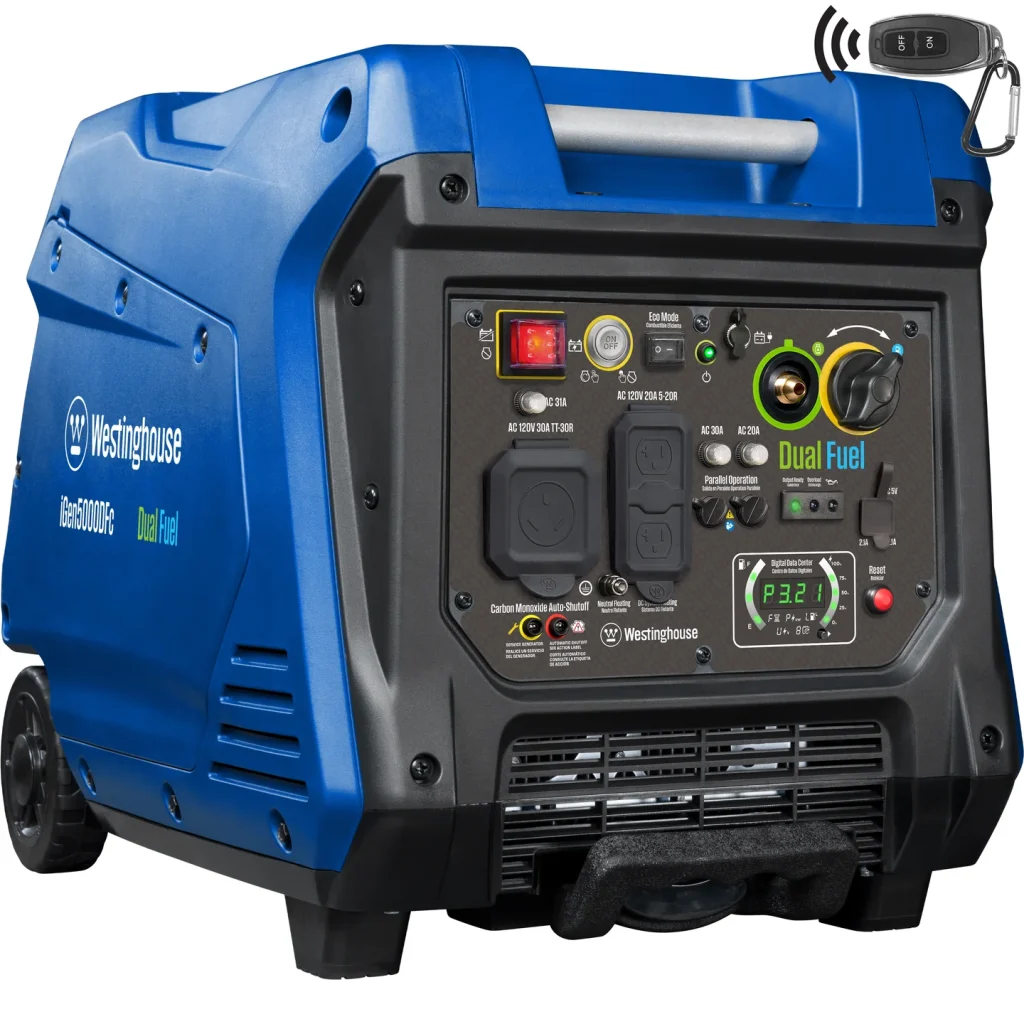
These inverter generators deliver strong output (around 3,700–3,900 running watts on many models) with impressive quiet ratings (often 52 dBA). Remote electric start, long runtime (up to 18 hours), RV-ready outlets, and wheels/handles improve usability. They handle air conditioners and full RV loads well while staying campground-friendly. Slightly heavier than the Honda but significantly more powerful in a single unit. Strong choice when you need more capacity without jumping to open-frame conventional generators.
Best Value: WEN Dual-Fuel or Inverter Models (e.g., DF360iX or similar 3,000–3,600W class)
WEN consistently ranks as a best-value pick. Models in this range offer solid wattage for RV use, dual-fuel options on some, quiet inverter operation, and RV-friendly features at a lower price than Honda or premium Westinghouse units. They provide reliable performance for occasional to moderate use and are frequently recommended when budget is a priority. Build quality and long-term durability may not match Honda, but real-world feedback for camping is positive.
Strong Premium Alternative: Yamaha EF2200iS
A close competitor to the Honda EU2200i with similar 1,800 running / 2,200 peak watts, quiet operation, and good fuel economy. Some users prefer its features or ergonomics. Excellent reliability and clean power in a portable package.
Comparison Table of Top Models
| Model | Running / Peak Watts | Noise (approx.) | Fuel Type | Weight (approx.) | Key Strengths | Best For |
|---|---|---|---|---|---|---|
| Honda EU2200i | 1,800 / 2,200 | 48–57 dBA | Gas | 47 lbs | Quiet, reliable, portable | Quiet camping, essentials |
| Champion 4,500W Dual-Fuel Inverter | ~3,500 / 4,500 | ~61 dBA | Gas/Propane | 90–100+ lbs | Power for AC, dual-fuel, RV outlet | Full RV loads |
| Westinghouse iGen4500/5000 | 3,700–3,900 / 4,500+ | ~52 dBA | Gas | 100+ lbs | Quiet + high output, remote start | Balanced high power |
| WEN 3,600W Dual-Fuel / Inverter | Varies (~3,000+) | Quiet inverter | Gas/Propane | Varies | Value, features | Budget-conscious users |
| Yamaha EF2200iS | 1,800 / 2,200 | 51.5–61 dBA | Gas | ~55 lbs | Reliability, clean power | Honda alternative |
Specs vary by exact model year and configuration; always confirm current ratings. Data reflects 2025–2026 reviews and testing.
Practical Tips for Using a Portable Generator with Your RV
- Size it correctly: Add up running watts of simultaneous loads and the highest starting surge (usually the AC). Leave a safety margin.
- Respect quiet hours and placement: Position the generator downwind, at least 20 feet from the RV and other campers, with exhaust directed away. Use a ground mat or board on soft surfaces.
- Fuel management: Carry stabilizer for gasoline and rotate stock. Propane is cleaner for storage. Never refuel a hot generator.
- Load management: Start high-draw items (AC) first or alone, then add others. Use eco/throttle modes for lighter loads to save fuel and reduce noise.
- Safety essentials: Never run a generator inside the RV, enclosed space, or near windows/doors. Use CO detectors. Follow all manufacturer guidelines and local regulations (including spark arrestors).
- Maintenance: Change oil as recommended (often after first few hours, then regularly). Keep air filters clean and store properly between trips.
- Parallel and solar hybrids: Many RVers pair a smaller quiet inverter with solar/battery systems for silent overnight power, running the generator only as needed during the day.
Buying Advice
Determine your primary needs: quiet operation and portability favor the Honda EU2200i or Yamaha; full AC capability points toward Champion or Westinghouse higher-wattage inverters. Dual-fuel is valuable if propane is easier to source or store. Check for CO-Minder or equivalent sensors and RV-specific outlets.
Budget $400–$700 for capable value models and $900–$1,200+ for premium Honda or high-output quiet inverters. Factor in accessories (parallel kits, covers, wheel kits, transfer cables). Read recent owner reviews for notes on cold-weather starting, long-term reliability, and real runtime with RV loads. Warranties of 2–3 years (or longer on some brands) provide peace of mind.
Consider campground rules and whether you’ll primarily dry-camp or use hookups. A generator that is too loud or underpowered becomes a frustration rather than a solution.
Final Recommendations
For most RV campers in 2026, the Honda EU2200i is the safest high-quality choice when quiet operation, reliability, and portability top the list. If you regularly need to run air conditioning and want dual-fuel flexibility in one unit, choose a Champion 4,500-watt dual-fuel inverter or comparable Westinghouse iGen model. Budget buyers will find strong performance in current WEN dual-fuel or inverter options.
Match the generator to your RV’s typical loads and camping style, prioritize inverter technology for clean quiet power, and practice safe operation. The right portable generator expands your freedom on the road while keeping campsites peaceful. Calculate your needs, compare current specs and prices, and you’ll be ready for reliable power wherever the adventure takes you.