Introduction
When the power grid fails as the result of unpredictable severe weather or aging infrastructure, the lights going out is no longer just a minor inconvenience — today, it can affect your work, spoil your food and cut off critical medical equipment. On the flip side, with the trend of wanting to be off-grid, outdoor enthusiasts want to take the comforts of the home deep into the wilderness.
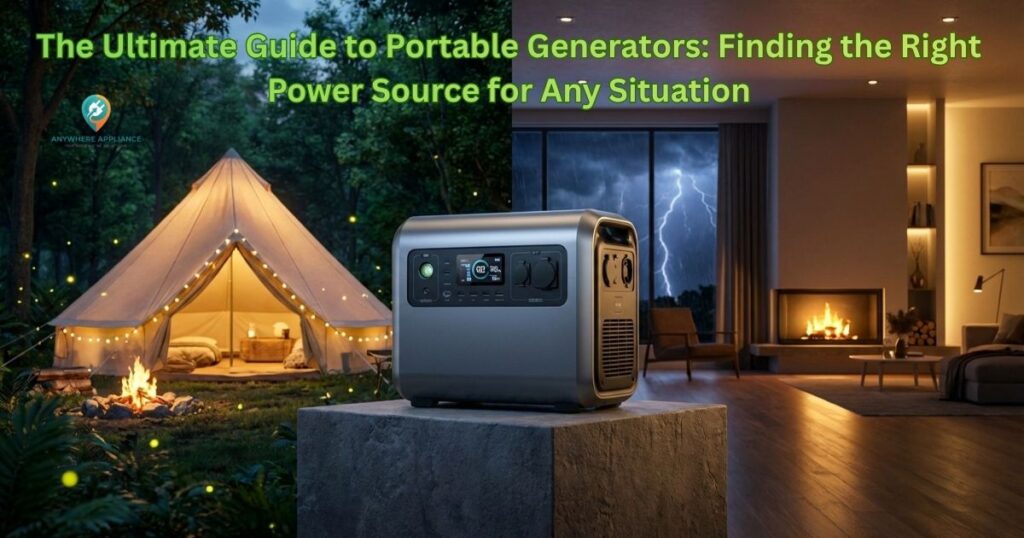
The aim of this guide is to help you navigate the complex world of portable power generation. Whether you're searching for an emergency power source to maintain your home's central air during a blackout period or perhaps searching to have a cup of coffee brewed while at a remote campsite, this total guide will help you identify the very best power generator suitable for your wants.
How to Select the Right Generator?
Calculating Wattage Needs
Choosing the Right Generator Begins with Knowing Your Electrical Needs. Understanding your electrical demand is a guaranteed way to start your research.
- Running Watts (Continuous) — refers to the constant amount of power needed for continuing smooth operation of an appliance.
- Starting Watts (Peak) — the massive and short burst of energy that are often needed to overcome the inertia of motor driven components.
Brief Example: Charging a smartphone is a simple resistive load that barely requires a steady low amount of running watts. In contrast, for a refrigerator, there is a high surge in starting watts to engage the compressor and it settles down to a lower running wattage. To determine the size of your generator, of all items you wish to power, add all the running wattages, then add all the starting wattages from all listed units and find the single highest.
Traditional vs. Inverter Technology
| Feature | Conventional Generators | Inverter Generators |
|---|---|---|
| Engine Speed | Constant 3600 RPM | Auto-throttles to load |
| Power Quality | Standard AC | Clean AC (less than 3% THD) |
| Best For | Heavy-duty tools, large appliances | Sensitive electronics, medical equipment |
| Noise Level | Louder | Whisper-quiet |
| Fuel Efficiency | Lower | Higher |
| Size & Weight | Bulkier | Compact |
- Conventional Generators: These units have an engine which is operated at a constant speed of 3600 RPM for the maintenance of power frequency. Conventional models are best for raw power on a budget which makes them ideal for heavy duty tools and large appliances. However, they are louder, bulkier and less fuel efficient.
- Inverter Generators: These use microprocessors to convert AC power to DC, and then "invert" them back to AC power. Inverters are desperately required in order to obtain clean power, in the form of less than 3% Total Harmonic Distortion (THD) in order to safely power sensitive electronics, such as laptops and medical equipment without frying the microchip. They also automatically throttle their engine speed in response to the electrical load, the result of which is unbelievably quiet operation and very good fuel efficiency.
Fuel Types Explained
| Fuel Type | Key Strength | Key Weakness |
|---|---|---|
| Gasoline | Energy dense, widely available | Degrades rapidly, can gum up carburetors |
| Propane (LPG) | Burns cleaner, near-infinite shelf life | Slightly less raw power than gasoline |
| Dual / Tri-Fuel | Ultimate resilience, can run on natural gas line | Higher upfront cost |
| Battery / Solar | 100% emission free, silent, safe indoors | Must be recharged; limited by capacity |
- Gasoline: Most common fuel that is energy dense. However, it degrades rapidly and can gum up the carburetors if stored for too long.
- Propane (LPG): Burns cleaner than gas; almost infinite shelf life; ideal for emergency preparedness; generates slightly less raw power than gasoline.
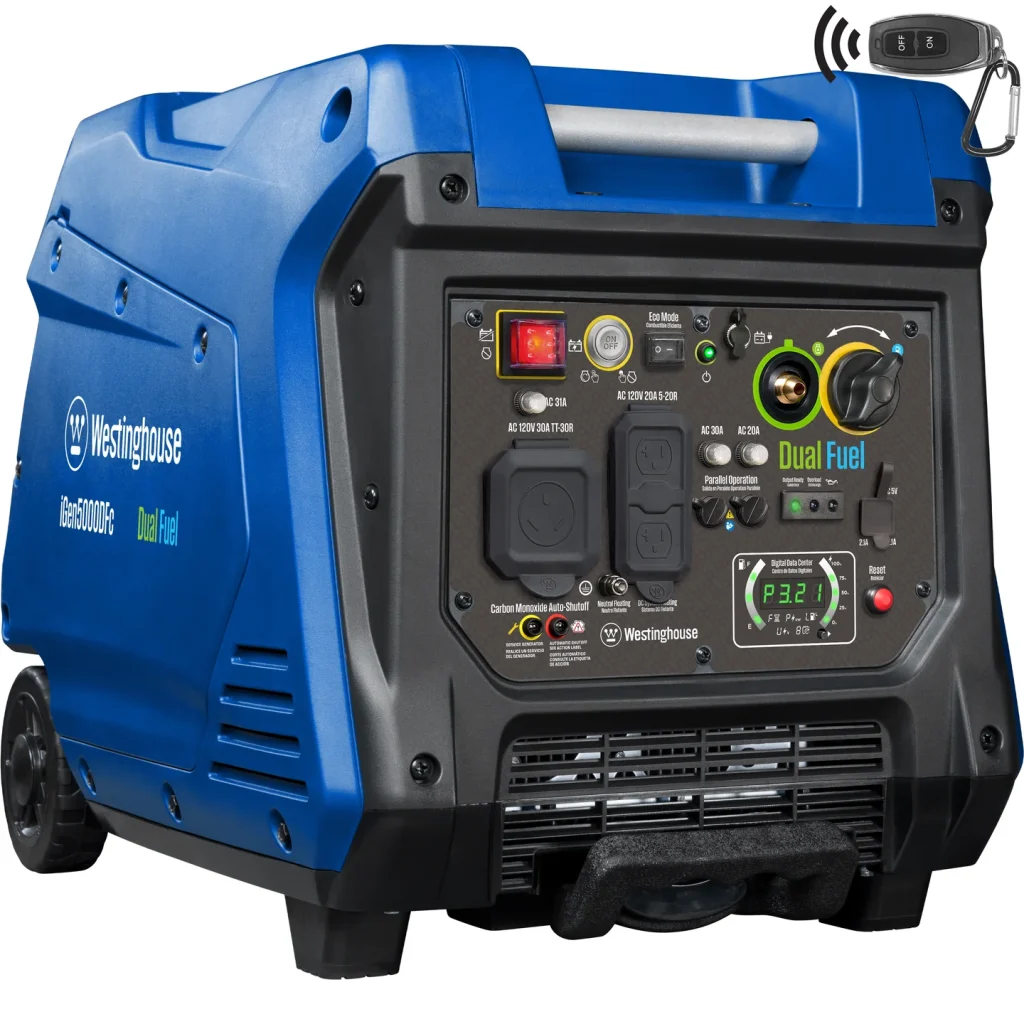
- Dual/Tri-Fuel: Very ultimate resilience. A tri-fuel generator is a generator that can run using gas, propane fuel, or you can hook this up to your home gasoline line for a virtually unlimited run time.
- Battery/Solar Power Stations: These are 100% emission free, silent, and safe to use indoors. However, they must be recharged using wall sockets, vehicles or solar panels.
The Best Portable Generators for Any Situation — 11 Product Reviews
1. EF EcoFlow DELTA 3 Plus — Best Overall Portable Power Station

| Spec | Detail |
|---|---|
| Output | 1800W continuous / 3600W surge |
| Total Outlets | 13 (including 6 AC outlets) |
| Fuel | Battery / Solar |
| Price | Around $399 USD for 8.5 kilowatts |
| Best Use | Home backup of essentials and semi-professional off-grid work |
Why we like it: It provides an unbeatable combination of power, 56 minute rapid wall charging efficiency and the affordable sub-$1000 price point.
Buy on Amazon | Buy on EcoFlow Official Site
2. Honda EU2200i — Best Compact Quiet Inverter

| Spec | Detail |
|---|---|
| Starting Watts | 2200W |
| Running Watts | 1800W |
| Fuel | Gas |
| Noise Level | 48 to 57 dBA |
| Best Use | Camping, tailgating and light duty worksites where noise is a constraint |
Why we like it: With a commercial grade GXR120-powered engine it offers unbeatable reliability and whisper-quiet performance at only 48 to 57 dBA.
3. DuroMax XP13000EH — Best High-Power Dual Fuel

| Spec | Detail |
|---|---|
| Starting Watts | 13,000W |
| Running Watts | 10,500W |
| Fuel | Gas / Propane |
| Best Use | Whole-home backup in the event of major storms |
Why we like it: It offers massive amounts of wattage that can run central air conditioners and well pumps at the same time with also the flexibility of switching to propane.
4. Champion 4500-Watt Dual Fuel Inverter — Best Dual Fuel Inverter

| Spec | Detail |
|---|---|
| Starting Watts | 4500W |
| Running Watts | 3500W |
| Fuel | Gas / Propane |
| Noise Level | 61 dBA |
| Best Use | The solution for the modern RV traveler |
Why we like it: It has the RV-ready TT-30R outlet, comes with ultra-quiet technology (61dBA), and offers a great deal of flexibility to switch fuels seamlessly.
5. Westinghouse WGen5300sc — Best Value

| Spec | Detail |
|---|---|
| Starting Watts | 6600W |
| Running Watts | 5300W |
| Fuel | Gas |
| Engine | Cast-iron sleeve engine |
| Best Use | Budget-conscious homeowners looking for emergency backup for essential circuits |
Why we like it: With modern safety features such as automatic CO sensor shutdown and highly affordable and reliable raw power that comes from a reliable cast-iron sleeve engine, it is a durable appliance that delivers consistent raw power and support.
6. Anker SOLIX F3800 — Best Premium Solar Generator

| Spec | Detail |
|---|---|
| Running Output | 6000W |
| Starting Output | 9000W |
| Fuel | Battery / Solar |
| Output Type | 120V/240V split-phase |
| Best Use | Home backup and large-scale energy storage |
Why we like it: It's safe for indoor use, features 120V/240V split-phase output, and has a ginormous expandable capacity, being able to brute force a refrigerator along for 15 hours or so with its base battery alone.
7. Generac GP9500E Tri-Fuel — Best Tri-Fuel Home Backup

| Spec | Detail |
|---|---|
| Starting Watts | 12,500W (on Gas) |
| Running Watts | 9500W (on Gas) |
| Fuel | Gas / Propane / Natural Gas |
| Best Use | Long-term outages powering main appliances |
Why we like it: It has the ultimate emergency flexibility in terms of hooking directly into your home's natural gas line and assuring that you will never be dependent on one fuel supply chain.
8. Goal Zero Yeti 700 — Best Lightweight for Camping
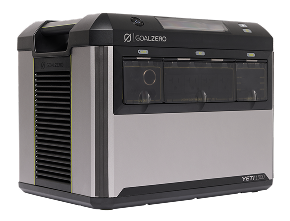
| Spec | Detail |
|---|---|
| AC Running | 600W |
| Surge | 1000W |
| Fuel | Battery / Solar |
| Water Resistance | IPX4 rating |
| Battery Type | LiFePO4 (4,000+ cycle) |
| Cold Tolerance | Down to -4 degrees F |
| Best Use | Weekend off-grid trips, beach days and tent camping |
Why we like it: It has an IPX4 water resistance rating, an upgraded 4,000+ cycle LiFePO4 battery and operates flawlessly even in extreme cold down to -4 degrees F.
Buy on Goal Zero Official Site
9. WEN 56235i Super Quiet 2000-Watt — Best Budget Inverter

| Spec | Detail |
|---|---|
| Starting Watts | 2350W |
| Running Watts | 1900W |
| Fuel | Gas |
| Weight | 39 lbs |
| THD | Less than 1.2% |
| Best Use | Basic home backup and full campsite setups |
Why we like it: It is super affordable, ultra-lightweight weighing in at only 39 lbs and excellent clean power (less than 1.2% THD) for basic sensitive electronics.
10. Honda EM5000SX — Best Overall Gas / Expert Pick

| Spec | Detail |
|---|---|
| Starting Watts | 7000W (10 seconds via iAVR) |
| Running Watts | 5000W max |
| Fuel | Gas |
| Engine | iGX390 |
| Safety | CO-Minder tech, Bluetooth app monitoring |
| Best Use | Demanding residential and industrial environment |
Why we like it: This provides commercial grade reliability with the iGX390 engine to advanced CO-Minder tech to protect from carbon monoxide as well as Bluetooth app monitoring.
11. Jackery Explorer 2000 Plus — Best Platform Solar Choice

| Spec | Detail |
|---|---|
| Output | 3000W |
| Surge Peak | 6000W |
| Fuel | Battery / Solar |
| Max Expandable Capacity | Up to 24kWh |
| Best Use | Expandable off-grid and home solar backup |
Why we like it: Has exceptional build quality, ultra-long standby mode, and a hugely expandable capacity (up to 24kWh) that increases with your power requirement.
Quick Comparison Table — All 11 Products at a Glance
| Product | Type | Watts (Running) | Fuel | Best For |
|---|---|---|---|---|
| EF EcoFlow DELTA 3 Plus | Power Station | 1800W | Battery/Solar | Home backup, off-grid |
| Honda EU2200i | Inverter | 1800W | Gas | Camping, tailgating |
| DuroMax XP13000EH | Conventional | 10,500W | Gas/Propane | Whole-home backup |
| Champion 4500W Dual Fuel | Inverter | 3500W | Gas/Propane | RV travel |
| Westinghouse WGen5300sc | Conventional | 5300W | Gas | Budget home backup |
| Anker SOLIX F3800 | Power Station | 6000W | Battery/Solar | Premium home backup |
| Generac GP9500E Tri-Fuel | Conventional | 9500W | Gas/Propane/NG | Long-term outages |
| Goal Zero Yeti 700 | Power Station | 600W | Battery/Solar | Tent camping |
| WEN 56235i | Inverter | 1900W | Gas | Budget campsite/backup |
| Honda EM5000SX | Conventional | 5000W | Gas | Industrial/residential |
| Jackery Explorer 2000 Plus | Power Station | 3000W | Battery/Solar | Expandable solar setup |
You may also like:
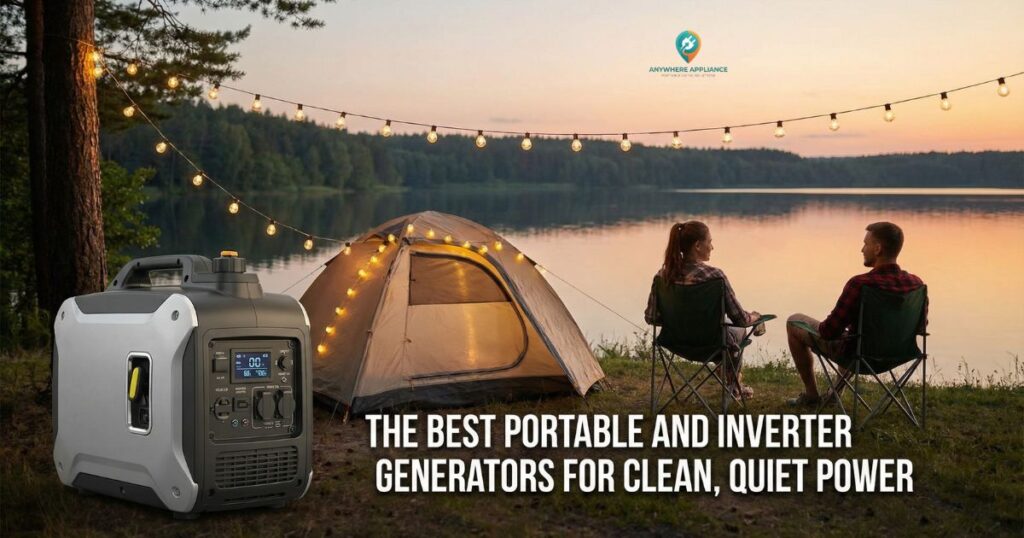
- The Best Portable and Inverter Generators for Clean, Quiet Power
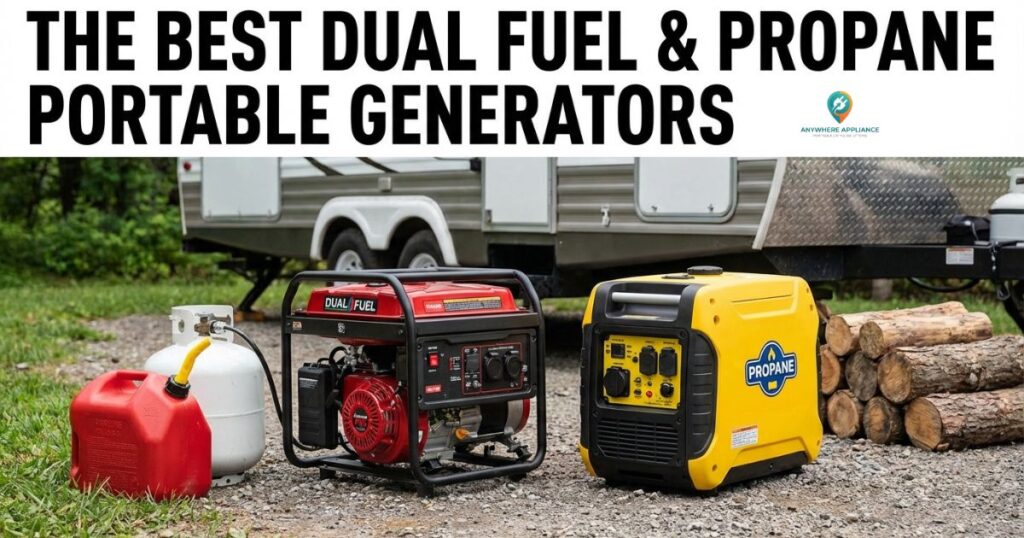
- The Best Dual Fuel and Propane Portable Generators for Maximum Flexibility
- Best Portable Home Generators for Power Outages
Conclusion and Next Steps
At the end of the day, what is the "best" generator is entirely up to your particular needs. A 40-pound whisper quiet power station is the perfect size for a weekend camping trip, while a humongous 13,000 watt dual fuel generator is the right choice for critical home backup during a hurricane.
Ready to find the match made in heaven? Check out some specific cluster pages based upon your exact cluster/exact profile for more detailed setups and accessories.